
1. Almost a year after the fall of Bashar al-Assad, I returned to my hometown of Damascus. I walked through the Jewish Quarter and Bāb Tūmā – places in Old Damascus that had shaped my childhood and early adult years. I came across Mafrazet al-Yahūd (the security checkpoint) while strolling through the maze of alleys in the Jewish Quarter. My stomach made that characteristic lunge, really a reflex. For years, under both Assads, that area reminded you incessantly, heavily that you were being watched. That burden affected the entire neighborhood. It altered your posture and the way you walked. Still, something was amiss this time. When I drew nearer, I found the expected tension missing. I wasn’t even holding my breath. The old silence had disappeared. Instead, I could hear children yelling and the clattering of a backgammon board nearby. Although it seemed as though the residents could finally breathe deeply, the past had not been erased – you could still feel its spirit in the stones.
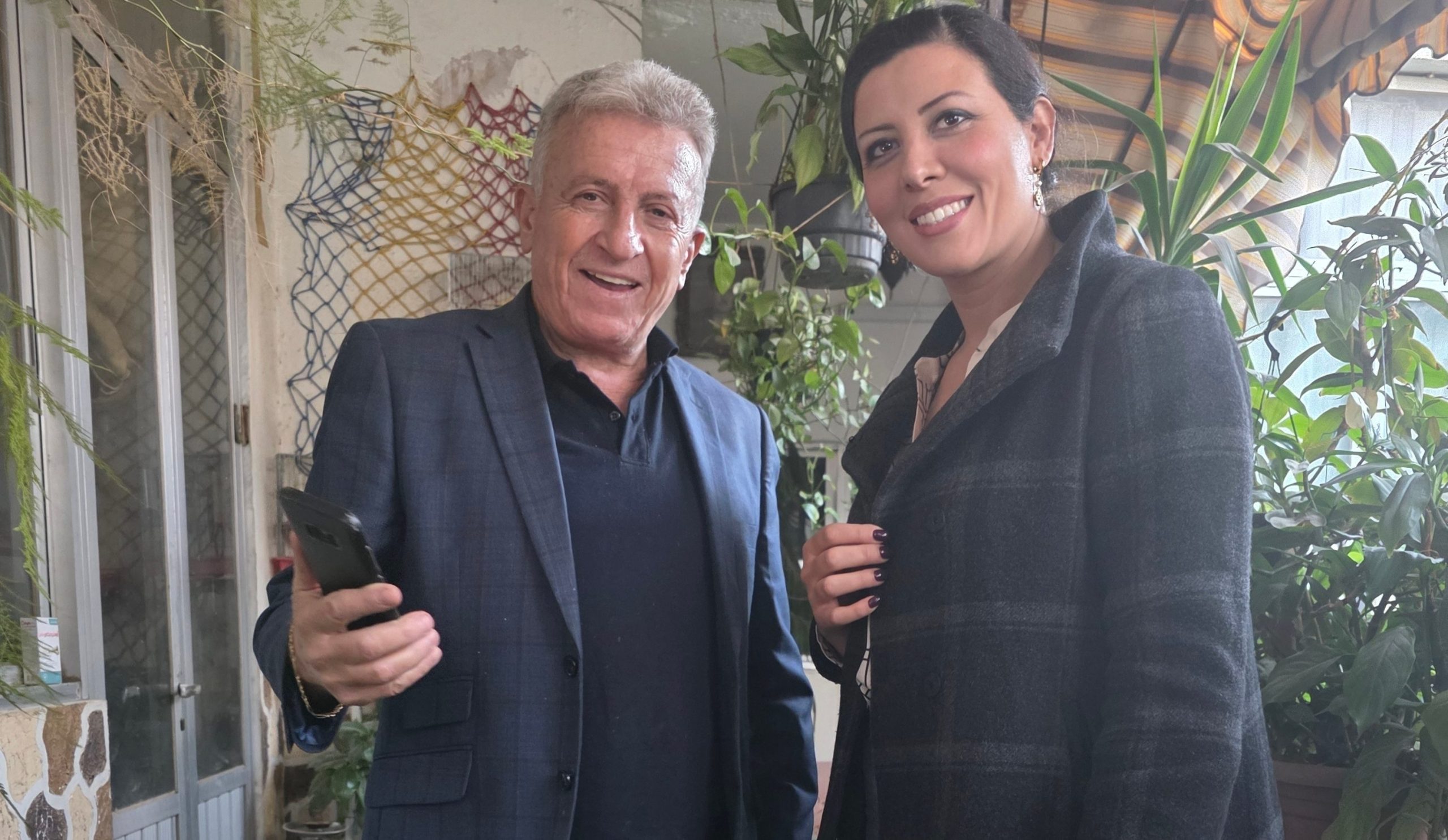
2. After walking nonstop for under five minutes, I arrived at the threshold of Bakhour Chamantoub’s house, the representative of the Jewish community in Damascus, known as “Eid” (ʿĪd) by those in the neighborhood. He welcomed me with great warmth and invited me into a world rich in tales.
Damascus‘s Minuscule Jewish Community
3. Syrian Jews remained outside the diverse Syrian mosaic for decades, due to political, demographic, or other reasons. In early 2013, at the end of the second year of the Syrian revolution, a page titled “Yahūd Sūriya” (Jews of Syria) appeared on Facebook, followed by several other pages, some of which disappeared again, while others remained, such as the page “Yahūd aš-Šām” (Jews of Damascus).1 Posts about Syrian Jews were published regularly, and the comments under these posts tended to be positive and were written by Syrians of all backgrounds.
4. On April 14, 2014, a post appeared on the Facebook page “Jews of Syria,” asserting that the author was Samuel Zion, born on April 1, 1988, and administrator and founder of the page.2 Approximately two months later, the online newspaper al-Mudun reported that 1,200 Syrian Jews were still living in Syria at that time and had been resettled in the Syrian city of Banias, including Samuel Zion.3
5. However, Eid did not give a definite number for the Jews who currently reside in Damascus permanently, as some of them are married to non-Jews and some have passed away in recent years, such as Pierre Qamou, Nazli Hamra, and others. However, Bakhour estimated that the number does not exceed seven persons, and he completely ruled out the possibility of Jews residing in the city of Banias.
Syrian Jews Between ‘Secular’ Dictatorial Rule and ‘Moderate or Tolerant’ Islamism
6. Jewish citizens in Syria during Hafez al-Assad’s rule did not enjoy the same rights as their Non-Jewish compatriots. The government restricted their freedom, prohibiting them from moving between provinces or leaving the country. Nathan Haswa, a physician from Damascus who now resides in Tel Aviv, explains, “The government granted Jews Syrian citizenship and wrote ‘Mossawi’ in fat red ink on their ID cards. Thus, a contradiction arose between Syrian society, which acknowledges, respects, and cares for our affairs, and the government, which considers us foreigners…”4
7. The lifting of travel restrictions on Syrian Jews by President Hafez al-Assad in 1991, following the Madrid Peace Conference, enabled many Jewish citizens to leave the country.5 In less than a year, the Jewish population in Damascus declined dramatically. By the turn of the twenty-first century, they had virtually disappeared. Even mentions of the Jewish community were few and far between until the early years of the Syrian revolution, when the Jews of Syria suddenly became a topic of interest for journalists, as some media reports began to circulate about the sporadic visits by some Damascene Jews to the country during Bashar al-Assad’s rule, including the last few years of his reign.6
8. With the fall of Bashar al-Assad’s regime, Syrian Jews were once again the focus of media attention. Three weeks after the regime collapsed, Bakhour made his first appearance on a newscast while visiting the synagogue of Jobar outside Damascus, which had been destroyed and looted throughout the 13-year civil war. A series of reports and television interviews followed with Bakhour, who told me that within a year, he had hosted many local and foreign journalists from Europe, America, and even Japan and China in his house, something he could not have imagined during the Assad regime. Bakhour added that there has been more freedom of opinion since the fall of the regime, and he can freely express his views on his Facebook page without being questioned by the current authorities in Damascus.
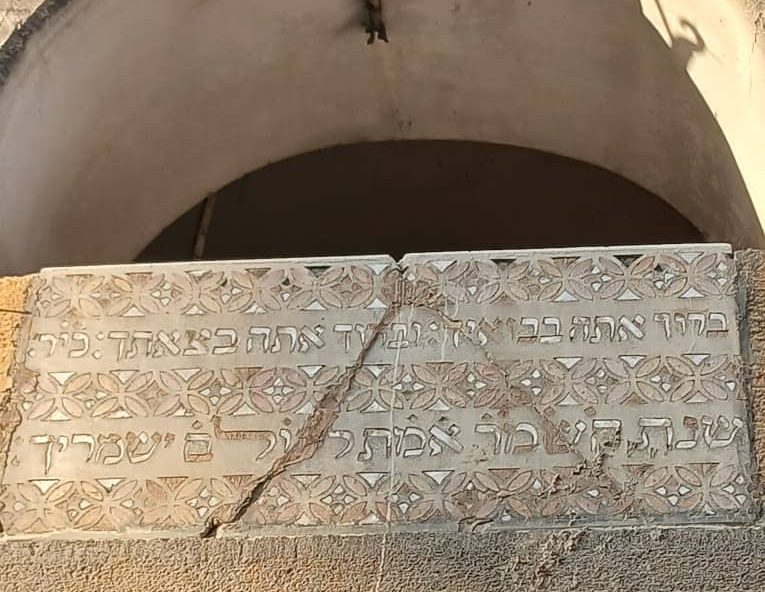
9. Since February 2025, numerous members of the Syrian Jewish community based in Brooklyn have been visiting Damascus regularly upon the official invitation of Ahmad al-Sharaa’s administration.7 The Syrian Jewish community in Damascus has recently begun to play an increasingly influential role in Syrian social and political life. On the one hand, they have worked intensively with a group of Syrian lobbyists in the United States to push for the lifting of the Caesar sanctions against Syria.8 On the other hand, October of last year witnessed a historic development: the first Syrian Jew ran for parliamentary office, becoming the first Jewish candidate since 1967.9 Additionally, several members of the Jewish community in the United States participated in an open dialogue with interim President Ahmed al-Sharaa in Washington.10
10. Recently, it was announced that the first Jewish organization dedicated to preserving Jewish heritage had been granted a license. The organization named “Syrian Mosaic Foundation” will be responsible for protecting the properties of the Jewish community in Syria. Regarding Jewish-owned real estate, Bakhour generally believes that the situation deteriorated under the new regime He notes that several houses in the neighborhood are being confiscated, prompting some property owners to hire brokers to manage their assets in hopes of selling or renting them. Throughout my tour of the neighborhood, I inquired about a house that had been closed for a long time and was currently being renovated. I was told that it had been purchased by a member of the General Security Service. Even the famous Lisbona House, which was unlocked when I passed by, is reportedly for sale, according to a local resident.11
Open Questions
11. After years of marginalization under the Assad regime in Syria – which consistently portrayed itself as the protector of minorities and the sole guarantor of their survival – we are now witnessing a new administration, one that emerged from the milieu of jihadist Islamism, taking tentative steps to reintegrate Syrian Jews into the country’s diverse social fabric.Yet many questions remain unanswered. What does the broader Syrian Jewish community worldwide think of this government’s apparent openness toward them? Why is Syrian Jewish representation limited to a small group of individuals who repeatedly dominate the headlines? Where are the others? Have they formally authorized Rabbi Hamra12 to act as their spokesperson? And are Rabbi Hamra and his associates empowered to reclaim, sell, or even safeguard Jewish-owned real estate?
12. Although Bakhour offered his own answers to these questions, I believe further perspectives are needed. I therefore hope that this contribution will serve as an open invitation to members of the Syrian Jewish community who are willing to address any, or all, of these issues.
References
- For the two Facebook groups, see: https://www.facebook.com/Jews.of.Syria (Yahūd Sūriyā); https://www.facebook.com/naash.demashq/ (Yahūd al-Šām); both last accessed 11 September 2026. ↩︎
- Facebook group “Yahūd Sūriyā” (14 April 2014), URL: https://www.facebook.com/100070627794674/posts/690404147689577/?mibextid=rS40aB7S9Ucbxw6v, last accessed 17 September 2026. ↩︎
- Fadi al-Dahuk, “Yahūd Sūriyā: Maʿa al-Asad, Ḍidd Isrāʾīl [The Jews of Syria: With al-Asad, Against Israel]”, Al-Mondon (2 June 2014), URL: https://www.almodon.com/arabworld/2014/06/02/يهود-سوريا-مع-الأسد-ضد-إسرائيل , last accessed 11 September 2026. ↩︎
- See “كأنو مبارح – ناتان حصوة.. ذكريات عن حياة اليهود في سوريا”, channel: Alhurra, uploaded: 29 September 2020, URL: https://www.youtube.com/watch?v=wsKLMPEQmUY&t=280s, last accessed 12 September 2026. ↩︎
- Itamar Rabinovich, The Brink of Peace: The Israeli-Syrian Negotiations (Princeton, NJ: Princeton University Press 2009), 16. ↩︎
- “Qubayla ‘al-Fiṣḥ al-Yāhūdī’: Safīr al-Šawq ilā Dimašq [Shortly Before Passover: An Ambassador’s Longing for Damascus], Al-Akhbar (10 May 2019), URL: https://www.al-akhbar.com/Sham/270229; “Yāhūd Amrīkiyyīn Aṣluhum Sūrī Zārū Dimašq bi-Bādira min al-Niẓām [American Jews of Syrian Origin Visited Damascus at the Regime’s Invitation]”, alarabiya (10 November 2021), URL: https://www.alarabiya.net/last-page/2021/11/10/يهود-أميركيون-أصلهم-سوري-زاروا-دمشق-ببادرة-من-النظام-; Luke Tress, “How did 12 Jewish New Yorkers end up vacationating in Syria?”, The Times of Israel (3 December 2021), URL: https://www.timesofisrael.com/how-did-12-jewish-new-yorkers-end-up-vacationing-in-syria/, all last accessed 15 September 2026. ↩︎
- “Yāhūd Sūriyā Yaʿūdūna maʿa Ḥāḫāmihim bi-Daʿwa Rasmiyya baʿda Ġiyāb 33 ʿāman [Syrian Jews Return With Their Rabbi Following an Official Invitation after a 33-Year Absence]”, alarabiya (20 February 2025), URL: https://www.alarabiya.net/last-page/2025/02/20/يهود-سوريا-يعودون-مع-حاخامهم-بدعوة-رسمية-بعد-غياب-33-عاما, last accessed 15 September 2026. ↩︎
- The Caesar sanctions are a set of sanctions that President Trump put in place in 2019 against the previous Syrian regime, including ex-Syrian President Bashar al-Assad, for war crimes against the Syrian people; see Vaghn Cockayne, “Syrian Jewish group wants Congress to end Ceasar sanctions”, Washington Times (20 November 2025), URL: https://www.washingtontimes.com/news/2025/nov/20/syrian-jewish-group-wants-congress-end-caesar-sanctions/, last accessed 15 September 2026. ↩︎
- “Man Huwa Henry Ḥamra, Awwal Yahūdī Sūrī Yadḫulu Sibāq Intiḫabāt Maǧlis al-Šaʿb baʿda ʿUqūd min al-Ġiyāb [Who is Henry Hamra, the first Syrian Jew to stand for election to the People’s Assembly after decades of absence?]”, BBC News ʿArabī, URL: https://www.bbc.com/arabic/articles/cwywm1wrpvyo, last accessed 11 September 2026. ↩︎
- See the Instagram post on the account alarabysy, from 13 November 2025, URL: https://www.instagram.com/reel/DRA4XiYDSOS/?igsh=MW01c3FtN3htcmYzdw%3D%3D, last accessed 11 September 2026. ↩︎
- “Beit Lisbona at Damascus, Syria”, Diarna, URL: http://archive.diarna.org/site/detail/public/199/, last accessed 11 September 2026. ↩︎
- Rabbi Hamra is a well-known Syrian Rabbi who was the first to return to Damascus after the regime’s fall in 2024 and is currently in charge of the Syrian Jewish community. ↩︎
Ella Christina Ayoub is a doctoral candidate at the Institute for Near and Middle Eastern Studies at Ludwig-Maximilians University Munich. Her research focuses on the portrayal of Jews in contemporary Arab literature, films, and television drama series, as well as their representation on social media. She also has a keen interest in the history and literature of Qaraite and Rabbanite Jews in the Islamic world and the Arabic translations of the Bible.
Suggested Citation: Ella Christina Ayoub, “The Jews of Damascus: A Complex Interplay of Presence and Absence”, Munich Research Centre for Jewish-Arabic Cultures Blog, 17 September 2026, URL: https://www.jewisharabiccultures.fak12.uni-muenchen.de/the-jews-of-damascus-a-complex-interplay-of-presence-and-absence/. License: CC BY-NC 4.0.
